

Navigating the Holidays Alone: Coping with Grief and Anxiety

Spending the holidays alone can bring up a mix of emotions. Whether you are single, living far from loved ones, estranged from family, or simply choosing solitude, it is normal to feel a combination of grief, anxiety, and longing. These feelings are valid, and they do not mean you are failing.
Even if you are physically alone, you can create meaningful connection and care for your emotional wellbeing. If you haven’t read Part One: Managing Holiday Anxiety with Family, it may be helpful to explore relational strategies for staying engaged even when family dynamics are complicated.
Understanding the Emotional Landscape
The holidays can amplify grief and anxiety. Grief may arise from the absence of loved ones, changes in relationships, or the loss of traditions. Anxiety can appear as worry about loneliness, missing out, or feeling disconnected.
Your nervous system responds to grief and anxiety in similar ways, including increased tension, alertness, and emotional overwhelm. Feeling sadness, nostalgia, or worry at the same time is normal. Acknowledging these emotions without judgment is the first step toward emotional regulation and coping with holiday stress.

Practical Strategies for Staying Connected
Even when you are alone, intentional actions can help you feel supported and connected.
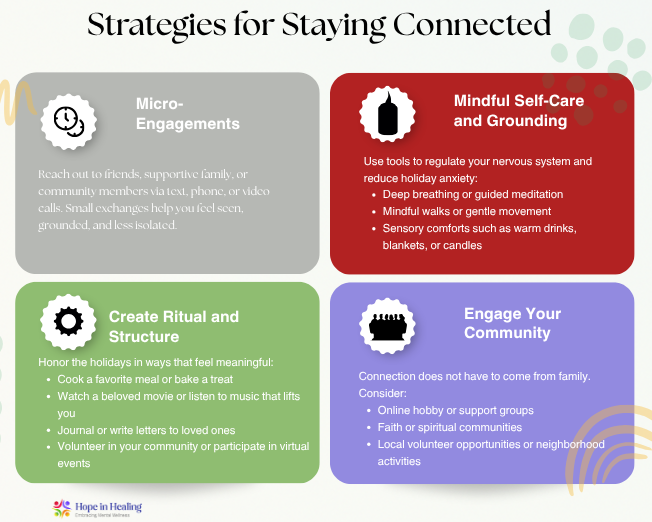
1) Micro-engagements
Reach out to friends, supportive family, or community members via text, phone, or video calls. Small exchanges help you feel seen, grounded, and less isolated.
2) Create Ritual and Structure
Honor the holidays in ways that feel meaningful:
Cook a favorite meal or bake a treat
Watch a beloved movie or listen to music that lifts you
Journal or write letters to loved ones
Volunteer in your community or participate in virtual events
3) Mindful Self-Care and Grounding
Use tools to regulate your nervous system and reduce holiday anxiety:
Deep breathing or guided meditation
Mindful walks or gentle movement
Sensory comforts such as warm drinks, blankets, or candles
4) Engage Your Community
Connection does not have to come from family. Consider:
Online hobby or support groups
Faith or spiritual communities
Local volunteer opportunities or neighborhood activities
Reframing “Alone” as Intentional and Empowering

Being alone does not mean being disconnected. Solitude can be restorative, reflective, and emotionally strengthening.
From an emotionally focused therapy perspective, regulating your attachment system is possible without physical proximity. You can intentionally create experiences and relationships that feel safe and supportive. Reflect on the traditions, rituals, and connections that are meaningful to you and prioritize them this season.
Balancing Grief, Anxiety, and Holiday Expectations
It is natural for feelings of sadness or worry to appear. Setting realistic expectations for your emotional state is key. Incorporating small moments of connection and self-care prevents isolation from intensifying grief or anxiety.
Final Thoughts
Spending the holidays alone does not mean being unsupported. You can maintain meaningful connection, honor your emotions, and create your own traditions. Intentional engagement and self-compassion help you navigate holiday loneliness, anxiety, and grief with emotional steadiness.
For strategies on managing holiday anxiety with family, check out Part One: Managing Holiday Anxiety with Family
or explore therapy support to create personalized coping tools.